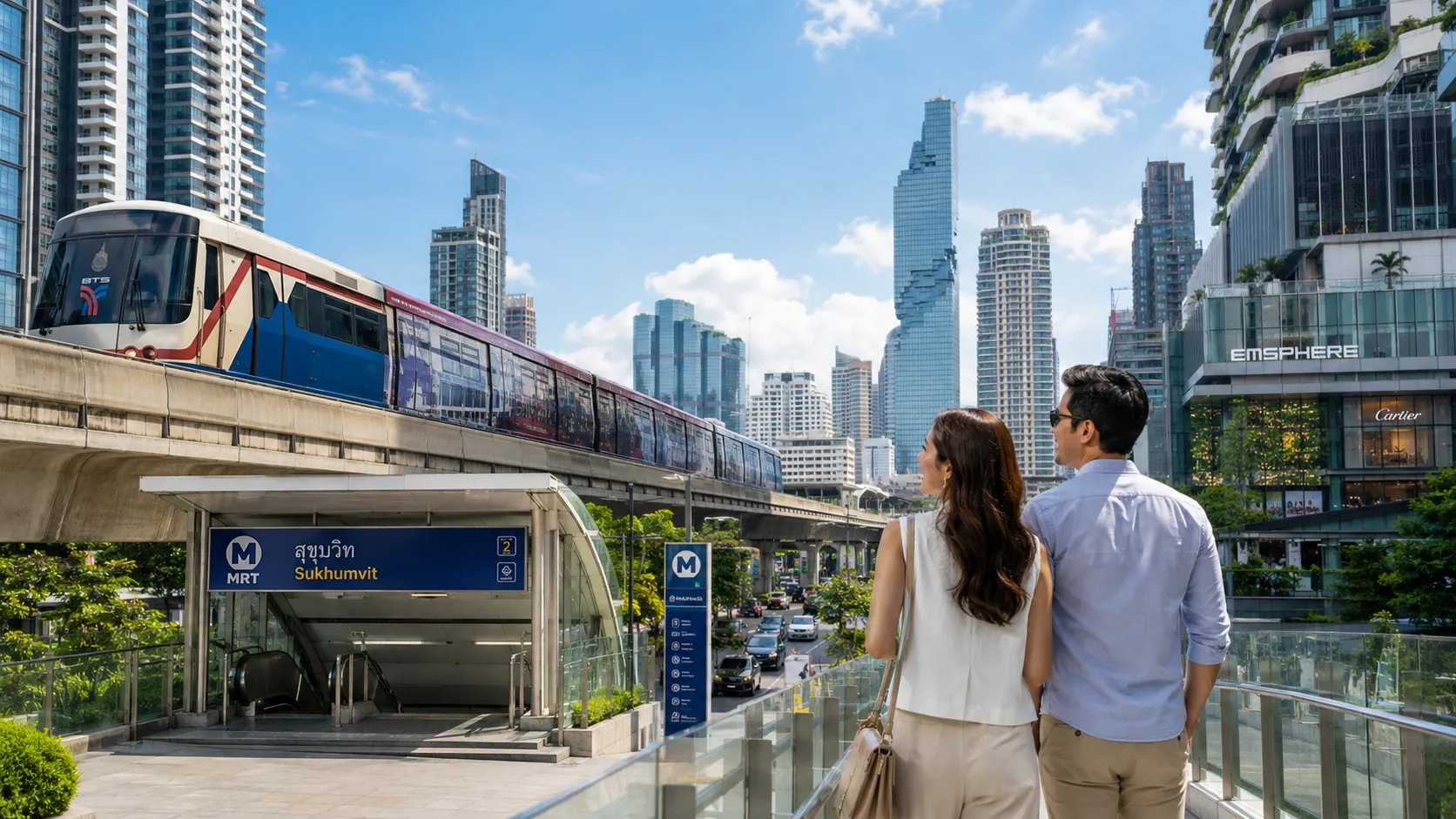
When searching for rentals in Bangkok as an expat, one of the most important decisions you’ll make is whether to live near the BTS (Skytrain) or the MRT (Metro). Both systems are efficient, air-conditioned, and far more reliable than battling traffic in a taxi or ride-hailing app, but they serve slightly different purposes and neighborhoods. Choosing the right one can dramatically improve your daily commute, lifestyle, and overall quality of life.
The BTS (Bangkok Mass Transit System) runs on elevated tracks with two main lines: the Green Line (north-south through central Bangkok) and the shorter Gold Line. It’s especially popular with expats because it serves high-demand areas like Sukhumvit, Thong Lo, Ekkamai, Siam, and Silom. Stations are easy to spot from street level, and many condos are built right above or within a 5-minute walk of the platform. This makes the BTS ideal if your work, international school, or social life revolves around the Sukhumvit corridor or the city center.
The MRT (Metropolitan Rapid Transit), on the other hand, runs underground with the Blue Line (a loop connecting Hua Lamphong, Silom, Sukhumvit, and northern areas) and the Purple Line (extending north toward Nonthaburi). It offers better coverage in residential neighborhoods that feel a bit more “local” and often has lower rental prices compared to prime BTS locations. Key interchange stations—such as Asok/Sukhumvit, Siam, and Mo Chit—let you switch between BTS and MRT seamlessly, giving you the best of both worlds.
Your commute should be the deciding factor. If you work in the financial district or frequent nightlife spots along Sukhumvit, a BTS-adjacent condo will save you time and stress. Conversely, if your office is near the Blue Line (for example, around Phetchaburi or Chatuchak) or you want easier access to the northern suburbs, the MRT may be more practical. Factor in transfer time: living within walking distance of an interchange station maximizes flexibility.
Other practical considerations include noise levels (BTS lines can be louder at street level), utility costs, and building amenities. Many expats also prefer BTS areas for the abundance of international supermarkets, gyms, and coworking spaces within a short walk.
Ultimately, the “best” choice depends on where you need to be every day. Map your typical routes on the official apps, then prioritize rentals near the stations that cut your commute the most.
Ready to find a home that truly fits your lifestyle? Contact our team today to browse expat-friendly listings near the BTS and MRT stations that matter most to you.